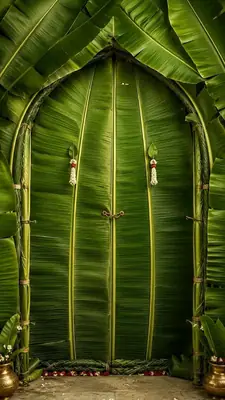
MMI-W-323
Bengali Save Date Cultural
from ₹3,600
Bengali · Wedding
We are a Kolkata studio, and Bengali weddings are the work we do most. That means the Bengali on your invitation is set by someone who reads it — correct conjuncts, correct honorifics, the parents named in the order your family expects — and the motifs are drawn from things we can walk to Bagbazar and buy.
Every design below is an existing piece of artwork we set your details into. If none of them is right, we redraw one around your wedding, or start from nothing.
From ₹3,600 · first draft in 48 hours · 3 free revisions
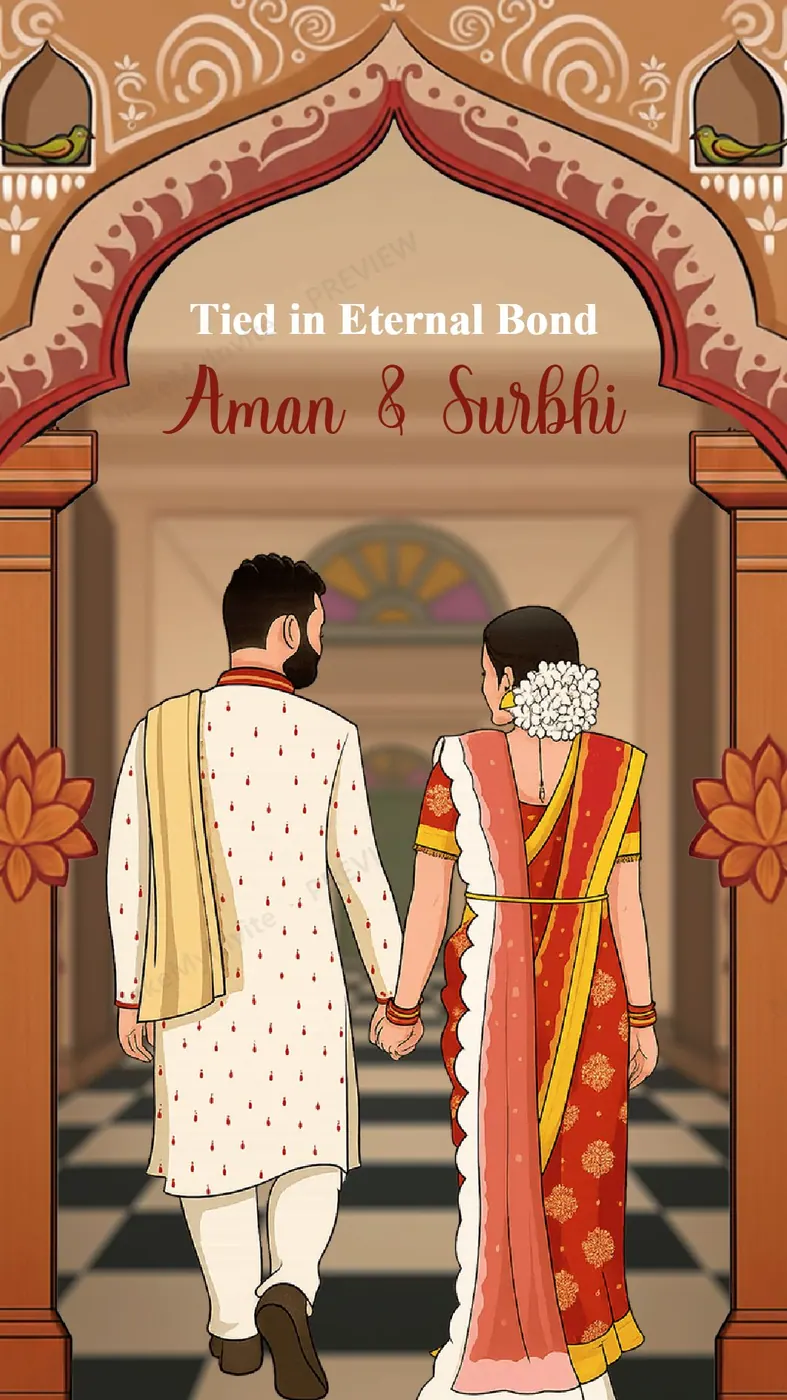
Designs first
MMI-W-323
from ₹3,600
MMI-W-322
from ₹3,800
MMI-W-300
from ₹5,000
What a template farm cannot tell you
A traditional Bengali invitation is issued by the parents, not the couple, and opens by addressing the guest rather than announcing the event. The most common opening is সবিনয় নিবেদন (sabinay nibedan — "respectfully submitted"), and the closing request is almost always আপনার শুভাগমন প্রার্থনীয় (apnar shubhagoman prarthaniyo — "your auspicious arrival is prayed for").
The event itself is শুভ বিবাহ (shubho bibaho); the invitation is নিমন্ত্রণ (nimantran). Younger couples increasingly want their own names at the head instead of their parents’. Both are correct now. We will set it either way — but decide before the first draft, because it changes the whole layout, not just a line.
The order is aashirbaad (the formal blessing, often weeks earlier), aiburo bhaat (the last unmarried meal), gaye holud (turmeric, usually the morning of or the day before), the biye itself — subho drishti, mala badal, saat paak, sindoor daan — then bashi biye the next morning, and finally bou bhaat, the reception hosted by the groom’s family.
Send a save the date four to six months out if guests are flying in. Send the invitation itself five to six weeks before the biye — earlier than a printed card, because a video gets forwarded and you want it circulating while people are still booking leave. The bou bhaat is frequently invited separately, to a different list.
Alpona — rice-paste floor drawing, made fresh and meant to wash away. It belongs at thresholds, which is why it works as a border rather than a background.
Shankha and pola — the conch-shell and red-coral bangles a married Bengali woman wears. Drawing them signals marriage more precisely than any ring.
Dhaak — the barrel drum. It carries the sound of arrival; we use it to set the tempo of the edit.
Topor and mukut — shola-pith headgear, cut by hand. Most stock illustrations get the cut edge wrong.
Tant and Baluchari — the weaves. Enlarged far enough, the thread itself becomes the ornament.
A Bengali wedding video invite is structured the way the wedding is: an opening that belongs to the elders and the aashirbaad, the turmeric and noise of gaye holud, then the biye itself — subho drishti, the first exchanged look, is the emotional peak of nearly every design in this set, followed by mala badal and sindoor daan.
The bou bhaat usually gets its own card at the end of the sequence, because it is usually its own list. If your family’s order differs — a bashi biye morning, a separate reception city — the sequence is rebuilt around your days, not the other way around.
Questions
Pricing
₹1,900 – ₹6,000
You choose from the catalogue, we set your names, dates and venues into it, adjust the palette to your outfits, and add your photographs. The artwork itself is not redrawn.
₹8,000 – ₹18,000
We redraw the illustration to your venue, your outfits, your city skyline; we script the sequence around your events; we compose or licence the music. Built for weddings with three or more events.
from ₹25,000
A concept meeting, a storyboard, original illustration and an original score. Typically three to four weeks, and typically for weddings where the invitation is part of a wider identity — cards, signage, stationery, monogram.
Related guides
A designer replies within 2 working hours with a firm quote and an honest answer about the timeline.
We reply within 2 working hours · Mon–Sat, 10:00–20:00 IST