
Source- huggies
Baby shower traditions are not just a celebration but more than that. By honouring parenthood, they mark the metamorphosis into a new life with the arrival of a newborn. However, the two different cultures- Eastern and Western cherish the concept of baby showers, but the celebration of welcoming a baby varies. In this blog, let’s find out the differences between baby showers in Eastern and Western cultures..
Comparing Baby Shower Traditions In The East And West
Let’s find out the cultural differences in baby showers:
- A Matter of Timing
- Western Cultures:
During the third trimester of pregnancy, baby showers are often planned by the mother-to-be’s family and friends. They gather together to shower love and good wishes for the baby and the mother. Moreover, they bring plenty of gifts and necessary items like baby clothes and nursery items. This is the time when it reflects a sense of anticipation, emotions, love, joy and lots of preparation.
- Eastern Cultures:
In Eastern countries like India, the idea of a baby shower is similar. But there are other celebrations that occur after the baby’s arrival. Family members wait for the baby’s safe birth before holding any celebration. After one week or one month of the baby’s arrival, elders plan for ‘Namkaran’, which is a naming ceremony.
2. Rituals and Symbolism
- Western Cultures:
In Western countries, Baby shower traditions are playful, lively and loaded with laughter. They often plan several activities, for example guessing the due date, Boy or Girl?, or games like “Guess the Baby Food.” The activities focus on fun. However, the rituals seem light-hearted and spin around blessings and good wishes.
- Eastern Cultures:
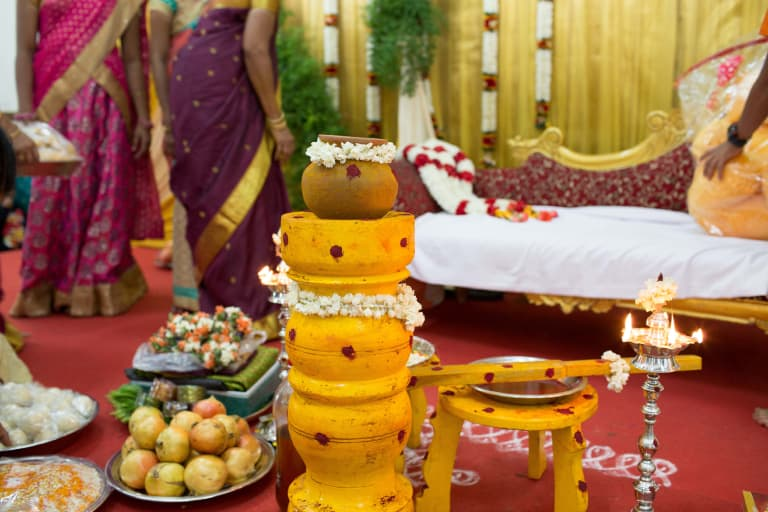
Eastern baby shower traditions are more centred on rituals, often rooted in ancient customs. A pre-birth ceremony in India is known as Godh Bharai, where the mother is adorned with bright clothes and is presented with a feast and blessings by the female members of the family. In the presence of a priest, well-wishers pray for good health and recite prayers for both the mother and child. The ambience works as a symbol of spirituality, protection and prosperity.
3. Celebrating Parenthood Together
- Western Cultures:
Baby showers are often celebrated as a female-only affair but with time, the concept has evolved. It is now common for fathers, male friends, or male family members to be involved in the ceremony, breaking the barriers of gender strictness.
Moreover, people are developing concepts like “dad-chelor” or “man showers”, where new dads are also celebrating. This idea may have come from the single-parent concept and gained popularity. Whether it is from dads or moms or from both, a baby shower seems incomplete without activities like barbecue parties or sports-themed gatherings.
- Eastern Cultures:
In eastern countries such as India, Baby shower traditions are still centred around mothers-to-be and female guests. Men, including the father, usually stay away from baby shower events as there are beliefs rooted deeply that reflect nurturing and blessing the expecting mother. However, that does not suggest that the father can walk through freely because his role comes with a permanent position throughout life.
4. Gifts and Their Meanings:
- Western Cultures:
Gift necessary items related to the newborn baby is significant. It is a major part in western culture where the guests bring gifts for the mother or the baby. Moreover, in some cases, the expecting mother makes a list of all items that she needs, whether it is a stroller or diapers or technical gadgets.
The focus is on providing essentials to the new parents they will need once the baby arrives. Gift-giving in western culture has become a practical affair ensuring that the family is well-prepared.
- Eastern Cultures:
On the other hand, gifting in Eastern cultures reflects symbolic meaning. Common items that a mother-to-be receives are gold jewellery, traditional clothes, silver jewellery, or spiritual gifts that signify cultural significance. Moreover, some of the cultures represent food items like fruits and rice. For example, in Chinese culture, red eggs suggest fortune and fertility. However, the focus is more on blessings for baby, and less on practicality.
5. Themes and Decor
- Western Cultures:
Whether it is a themed party like “Wonderland” or a sophisticated tea party, Baby shower traditions in Western cultures are often celebrated elaborately. The decoration speaks to the idea of the host and sets the mood with items like balloons, centrepieces, drapes, etc, to create perfect memories. Besides, online ideas from Pinterest and Instagram influencers help to plan stylish and unique baby showers which are visually striking.
- Eastern Cultures:
Decorations in Eastern cultures focus on traditional elements. Besides, the decoration may include symbols that represent prosperity and fertility. For example, coconuts, rice, and colourful flowers in Indian culture signify sacred affairs. Especially in Hindu traditions, decoration may include a mandap, or sacred space, decorated with marigold flowers and leaves. Similarly, Chinese culture features red, which represents good luck and happiness. The setting focuses more on customs rather than on personal tastes or aesthetics.
6. Food: Snacks or Full Course?
- Western Cultures:
Guests from Western cultures prefer light snacks and sweet treats rather than having a full-course menu. Light snacks like fish and chips, fries, cupcakes, or themed foods like special-shaped cookies. Usually, the celebration focuses on beautifully decorated cake and sometimes alcoholic and non-alcoholic beverages.
- Eastern Cultures:
Eastern baby showers are often accompanied by a lavish feast. In India, for example, the mother-to-be is treated to a spread of her favourite foods, signifying abundance and joy. The cuisine is deeply rooted in cultural preferences—there might be sweets like *laddoos*, spicy dishes, and lots of homemade delicacies that reflect the family’s regional identity. It’s not just about feeding the guests but about celebrating the prosperity that a new child brings to the family.
7. Superstitions and Beliefs
- Western Culture:
Gender revealing is one of the celebrated options in Western culture. Even celebrating pregnancy is also celebrated openly with friends and families. Although this culture is not fully superstition-free, people are generally excited about the new member.
- Eastern Culture:
Meanwhile, Eastern cultures are covered with superstitions of pregnancy. For example, in most parts of India, having a girl child signifies bad luck. Moreover, the mother may get death threats due to giving birth to a baby girl. Buying toys or clothes for the baby appears to be bad luck before it’s born. The belief says an early celebration might invite misfortune. This can be the reason why families wait before announcing the new arrival.


